



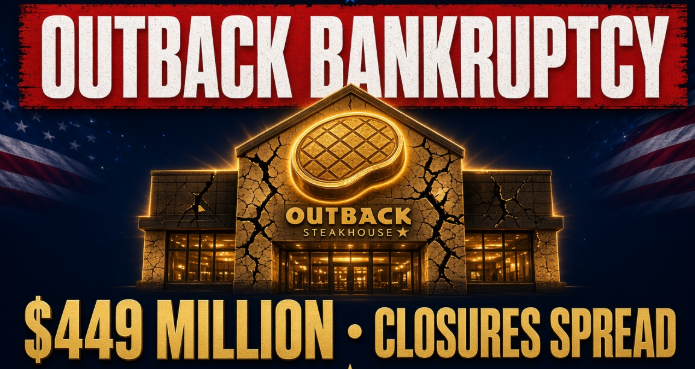
San Diego-based Out West Restaurant Group, also called Cerca Trova Restaurant Group, filed Chapter 11 in Delaware on Monday. The filing covers 61 Outback Steakhouse locations in California, Arizona, Colorado, Nevada and New Mexico. Debt has climbed from roughly $269 million in late 2020 to about $449 million.
CEO David Goronkin told the court that guest traffic and earnings kept declining while food, labor and other costs kept rising. More than half the company’s employees work in California. The operator has already closed locations and shrunk from 99 restaurants in 2018. COVID cut revenue about 35 percent. Beef prices have risen roughly 5 percent a year since 2022. A recent California wage-and-hour class action settled for $1.6 million.
Bloomin’ Brands, Outback’s parent, is offering $26.3 million for the assets plus up to $5.5 million in emergency financing. The company called the situation “isolated” and said the restaurants are expected to stay open during the process.
Outback Steakhouse’s largest U.S. franchise operator files for bankruptcy with $449 million in debt, affecting 61 restaurants! 😳🥩 https://t.co/Djnc8FF4MZ
— My Mixtapez (@mymixtapez) November 3, 2026
Weeks earlier, Meritage Hospitality Group, one of Wendy’s largest franchisees, filed its own Chapter 11. It operated more than 300 locations across 15 states. The company lost $31.5 million in 2025 and another $23.1 million in the first half of 2026. It blamed weak sales, heavy discounting, ineffective marketing and stubbornly high beef prices. Courts have cleared additional closures. Wendy’s is asserting claims near $147 million in unpaid royalties and fees and has agreed to look at buying up to 163 of the units.
These filings sit inside a wider wave. Franchisees of Popeyes, Applebee’s, Subway, Checkers/Rally’s, Denny’s, Hardee’s and others have filed or closed locations through 2025 and 2026. TGI Fridays is down to roughly 70 U.S. restaurants. Fat Brands went through its own Chapter 11 process. Debt taken on for expansion, slower post-COVID traffic, food inflation and labor costs keep compounding.
Ten Outback Steakhouse locations across four states closed last month prior to the filing of a bankruptcy petition by one of the chain’s largest franchisees, according to court documents. https://t.co/fbuiayliOg
— The Washington Times (@WashTimes) November 5, 2026
On X, users and outlets have zeroed in on California’s wage rules. Western Journal and other accounts framed the Outback filing as another casualty of the state’s “sky-high” minimum wage. Statewide rate sits at $16.90 for most workers, with local rates higher and a separate $20 floor for many fast-food chains. Operators with heavy California footprints feel the squeeze first.
California’s restaurant employment has declined for three straight years while the wage floor rose, according to Bureau of Labor Statistics data cited in industry tracking. Higher mandated pay does not automatically produce more hours or more jobs when traffic is soft and food costs stay elevated.
California’s Sky-High Minimum Wage Claims Another Victim as Major Outback Steakhouse Franchisee Is Forced to File for Bankruptcy https://t.co/F7Uw9wByxM
— K Shiner (@katscheiner) November 6, 2026
For diners the result is fewer locations and higher menu prices as surviving operators pass costs through. For workers it is fewer hours and fewer restaurants in the markets where the numbers stop working. The same pressures are hitting both casual dining and quick service at the same time.
Whatfinger News will keep tracking the closures and the cost math behind them.
— The Whatfinger News Team: Beth and Lisa, with Grok on edits and graphics
