



🚨BLOODBATH IN JAPANESE MARKETS
¥73,005,000,000,000 ($465B) wiped out from Japanese stocks as the NIKKEI crashes -6.2%.
The AI bubble is popping across global markets. https://t.co/1lllZkJuQZ
— Bull Theory (@BullTheoryio) November 6, 2026
Bloodbath in Tokyo and Seoul: Asian markets crater as Wall Street’s AI tech crash spreads after the midterms.
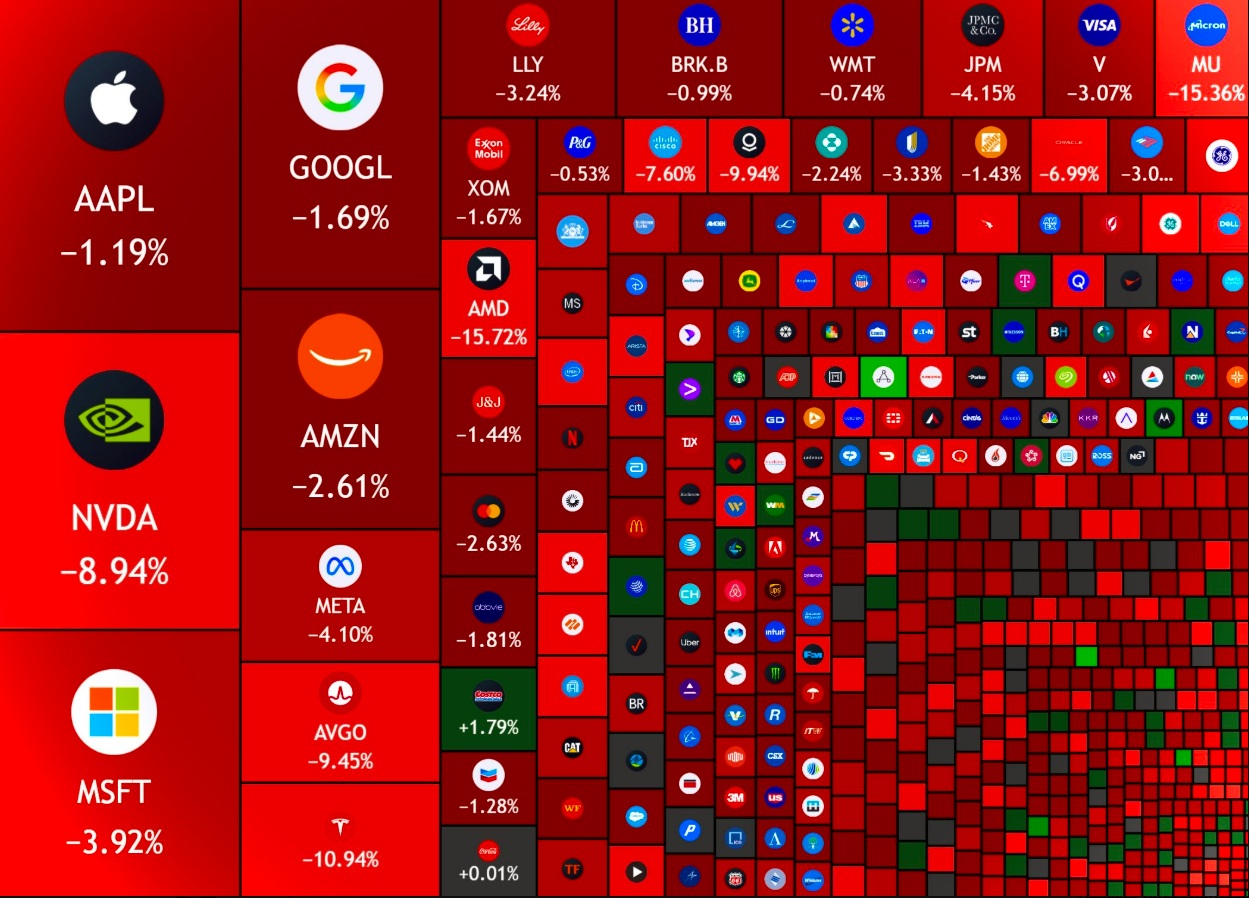
Thursday’s Wall Street rout wiped out roughly $2.5–3 trillion in value. The Nasdaq dropped 5.5%, the S&P 500 fell 4.4%, and the Dow lost more than 1,800 points. The Philadelphia Semiconductor Index plunged over 12%. Nvidia sank 9.3%. It was the worst day for the major indexes since the April 2025 tariff shock. Investors dumped AI and chip names on fears that the Democratic midterm sweep would slow the data-center buildout that has powered the boom.
Friday morning in Asia, the selling accelerated.
South Korea’s Kospi opened down more than 8.5% and triggered a 20-minute circuit breaker halt—the tenth this year. It punched below 5,000. Samsung Electronics fell around 10%. SK Hynix dropped more than 11%. Thursday had already cost the index 5.28%, with foreigners dumping roughly 3.4 trillion won. Memory chips that feed the AI trade took the hardest hits.
Japan’s Nikkei 225 slid 5–6% early, trading near 57,000 after Thursday’s close of 61,078. From its June peak near 72,000, the index has now lost enough ground to enter technical bear-market territory (a 20% decline from the high). SoftBank, Tokyo Electron, and other AI-linked names led the drop. Broader Asian tech markets, including Taiwan, followed lower.
Pundits and traders on X pointed to the same driver: the midterm results. Democrats took both chambers, and markets priced in tighter rules on AI data centers, power use, and local approvals. Asian chipmakers and equipment suppliers—Samsung, SK Hynix, Tokyo Electron, and others—are heavily exposed to that U.S. buildout. One widely shared view called it a “Blue Wave shock” that hit an already-stretched AI trade. Circuit breakers, sidecar pauses, and rapid foreign selling showed how quickly leverage and concentration in a few names can amplify the move.
🚨 BREAKING: The AI crash is hitting 7 markets at the same time.
This is what 2008 looked like in week 1. A few hedge funds. A -10% drop. Nobody called it a crisis.
1/ US: Nasdaq -5.5% today, -11.9% from its October record. Nasdaq 100 -6.4%. S&P 500 -4.4%. The fear index jumped 63%.
2/ CHIPS: US chip stocks -12.3% in one day. Nvidia -9.3%, now $1.39 trillion below its record.
3/ SOUTH KOREA: KOSPI -5.3%, program trading halted. Down 42.6% from its June record. SK Hynix -58% from its high. Samsung -46%.
4/ KOREA IN NEW YORK: Korea’s main US-listed fund fell 12.6% after Seoul closed. More than double Seoul’s own drop. Seoul opens again in a few hours.
5/ TAIWAN: -3.2% today. -8% this week.
6/ JAPAN: Nikkei -1.8% today. -5.5% this week.
7/ CRYPTO: Bitcoin -5.6%, under $76,000. $870 million in leveraged bets wiped out in 4 hours.
Now zoom out.
Big Tech will spend over $800 billion on AI this year. $227 billion in one quarter alone. Over $2 trillion planned in 2 years, with about $600 billion of cash. Their free cash flow just went negative for the first time ever. The revenue is not there.
The smart money sold first. Retail bought it on borrowed money. In July, 360,000 Korean accounts were force-sold. KOSPI is now below that July low.
In 2008 the Nasdaq was already -24% when Lehman fell. Then it fell another 42%. Nobody is calling this a crisis yet. But Korea’s market officials already plan for the day KOSPI falls 20%. That is when they shut the market.
Goldman says hedge funds sold every AI stock they bought since 2025, in 5 sessions. Morgan Stanley says hedge funds cut risk harder than in any October in at least 10 years.
Inflation is 3.7%. Oil is near $99. No easy rescue this time.
This is not a dip. This is just the beginning.
I’m posting every market that breaks next and every forced sale as it happens. Follow me, and send this to anyone still buying the dip.
— Whale News Daily (@WhaleNewsDaily) November 5, 2026
Some noted the selling looked technical as well as fundamental—profit-taking after a long run, forced liquidations, and Asia catching Wall Street’s overnight hangover at higher speed. US futures were mixed in the early hours, and crypto held relatively steady, but the equity damage in tech-heavy indexes was clear.
As of this writing, Seoul had halted trading on the open and Tokyo was deep in the red. The numbers are still moving. The core story is straightforward: Wall Street’s AI and chip sell-off after the midterms is now pricing into the Asian markets that supply the hardware.
Also tracking markets via Business and money vids from all channels on our Business and Money Aggregate
Luke and Lisa with Grok on edits and graphics
