

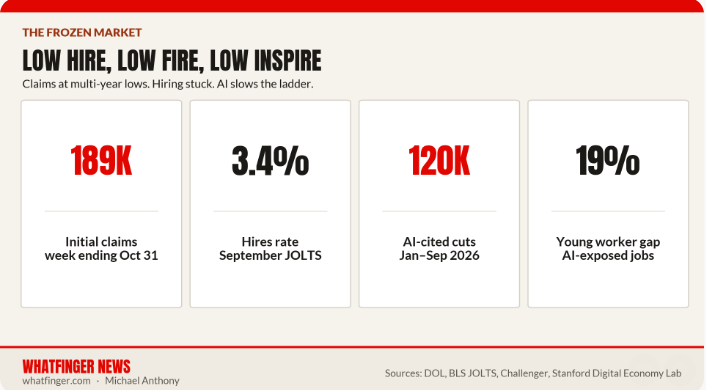
American employers still refuse to fire workers in any meaningful numbers. Initial jobless claims fell to 189,000 for the week ending October 31 — the lowest in years and near 57-year lows. Continuing claims rose to about 1.72 million. Layoffs are not the story. Hiring is.
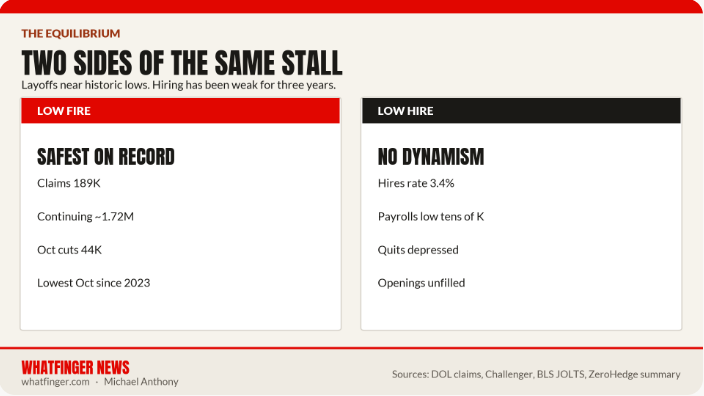
The labor market has sat in this low-hire, low-fire equilibrium for roughly three years. September JOLTS data showed roughly 7.5 million openings and a hires rate of just 3.4 percent. Net payroll growth has averaged low-to-mid tens of thousands for most of 2026. Unemployment holds near 4.2 percent, which looks stable on paper. Mobility is dead. Quits stay depressed. Companies post vacancies and leave them open. Workers who have jobs keep them. Workers who want better ones or first ones wait longer.
Sentiment still sucks. University of Michigan closed October at 48.0, near historical lows, with year-ahead inflation expectations around 4.7 percent. Conference Board confidence rebounded to 91.7, but the expectations component lagged well behind levels that signal healthy momentum. People have paychecks. They do not feel particularly good about any of it. Purchasing power, sticky prices, and the sense that the expansion has no juice dominate the complaints. These numbers will feed the political arguments heading into the midterms. Track the latest polling at the Whatfinger News election hub: https://dedicatedissues.com/election/polls.html.
Challenger, Gray & Christmas put fresh numbers on the low-fire side this week. Employers announced 43,994 job cuts in October, down 71 percent from a year earlier and the lowest October total since 2023. Year-to-date announced cuts are the lowest since 2022. Andy Challenger called it a low-fire environment: companies are holding the workers they have heading into the holidays and adding mostly seasonal help. Tech still leads the year’s cuts with more than 170,000 announced.
Whatfinger’s Business and Money Aggregate
AI is the quiet force on the hire side. Companies cited artificial intelligence in 120,136 announced job cuts through September — about 21 percent of all announced cuts and the top stated reason. That remains a fraction of overall separations, and total announced cuts are down sharply from 2025. The sharper signal is at the entry level. Stanford Digital Economy Lab researchers, using ADP payroll data, found employment among 22- to 25-year-olds in the most AI-exposed occupations is about 19 percent below where it would be if it had tracked less-exposed peers. The gap widened from 15 percent a year earlier. It is happening mainly through fewer hires, not more firings. Experienced workers show no comparable shortfall.
⚠️BREAKING:
*U.S. JOBLESS CLAIMS RISE 189,000; EST. 197,000; PREV. 195,000
*LOWEST SINCE JULY
🇺🇲🇺🇸 https://t.co/xIMzxASaeM
— Investing.com (@Investingcom) November 5, 2026
Goldman Sachs economist Joseph Briggs estimates AI could eventually displace up to 9 percent of U.S. workers during the transition, with slower hiring trimming employment another 3 percent. Most of that displacement, he expects, will arrive with the next recession. For now, employment in the most AI-exposed industries is running only about 10,000 jobs below trend, roughly offset by AI-related construction hiring. Only about 23 percent of establishments have built AI into regular workflows.
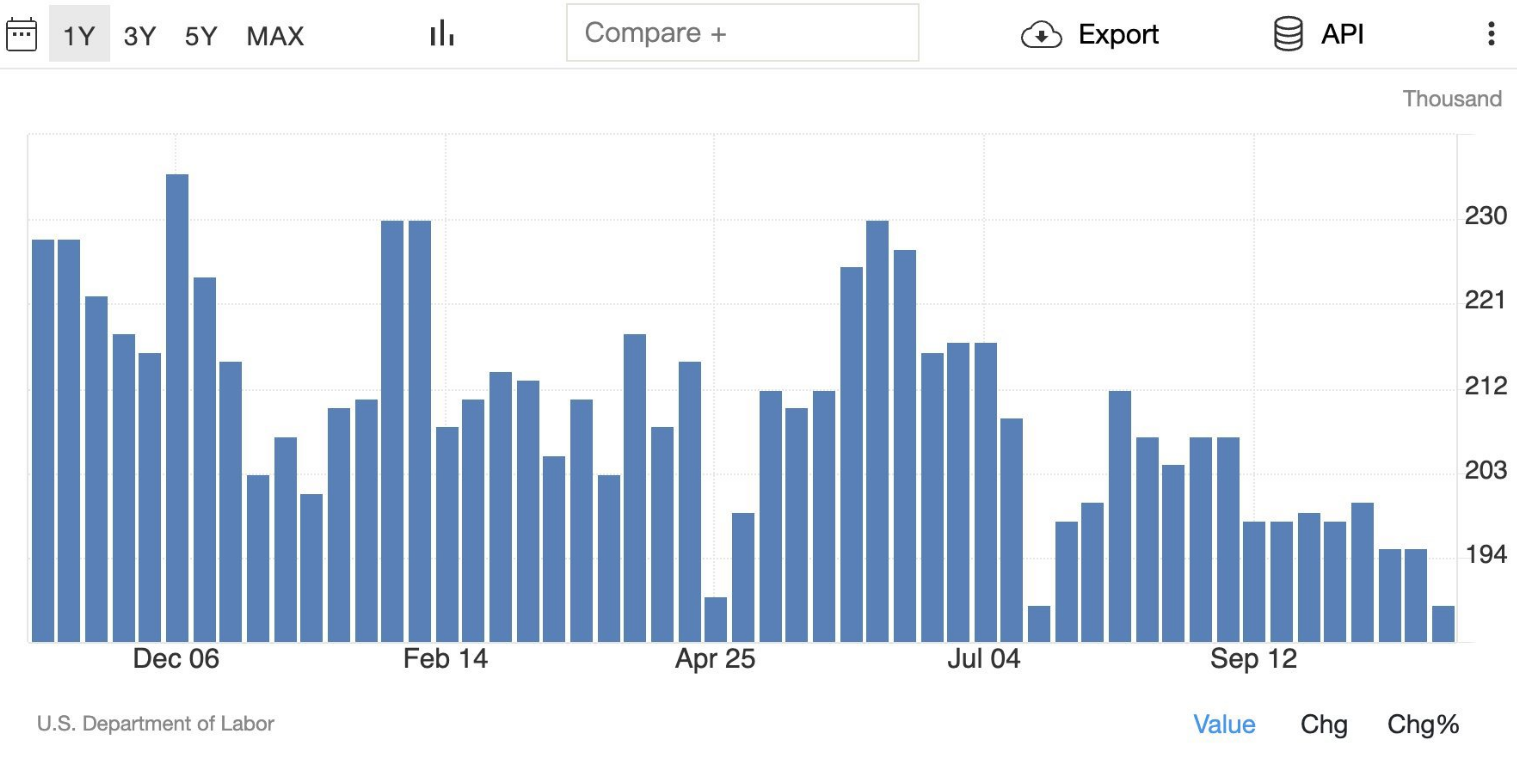
US initial jobless claims fall to 189,000 in the final week of October. • Down 6,000 from the previous week. • Below market expectations of 196,000. • Matches the near 57-year low recorded in mid-July. Another sign of resilience in the US labour market.
Corporate profits are up strongly while private hiring has barely moved. One analysis put year-on-year profit growth at 20.8 percent against private employment growth of 0.5 percent. Companies are getting more output without adding permanent headcount. Seasonal hiring plans are expanding — Amazon alone is targeting 300,000 holiday workers — but permanent slots stay tight.
The upcoming payrolls report will be read against this backdrop. Modest numbers will be spun as resilient. The deeper picture does not change: low hire, low fire, and still very little inspire. Existing workers are unusually safe. The ladder for new entrants, especially in AI-exposed white-collar work, has gotten steeper. Dynamism that used to define expansions is missing. Until hiring reaccelerates or the next downturn forces the adjustments, this is the market.
The Whatfinger Team: Ben and Beth with Grok on edits and graphics
Whatfinger’s Business and Money Aggregate
