


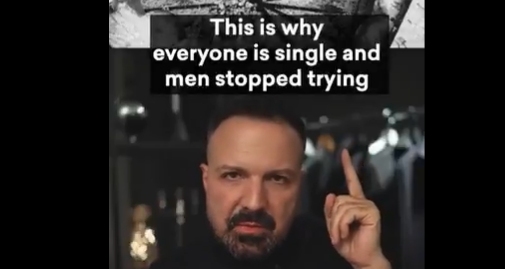

This forgotten mouse experiment is now more relatable than ever.
[📹 istokp] pic.twitter.com/UViUaCBg5E
— Massimo (@Rainmaker1973) August 8, 2026
A decades-old lab experiment (above) involving mice is suddenly making the rounds again, and the timing feels less like nostalgia and more like a warning label no one wants to read. A recent post from science curator Massimo (@Rainmaker1973) highlighted the so-called “forgotten” mouse experiment, pairing archival footage with a modern narrator drawing uncomfortable parallels to single young men who have checked out of the mating market. The video lands with a thud because it is no longer fringe speculation. It tracks with what a growing number of young people are actually doing: withdrawing under the pressure of constant digital performance.
In July 1968, ethologist John B. Calhoun dropped four pairs of mice into what he called Universe 25—a carefully engineered rodent paradise at the National Institute of Mental Health. Unlimited food and water. No predators. No disease. Nesting boxes stacked like apartment towers. Climate control. Space theoretically sufficient for thousands. The mice did what mice do when every material need is met: they reproduced like mad. The population exploded, doubling every couple of months.
Then the wheels came off.
Social roles clogged. Dominant males could no longer hold territory because there was nothing meaningful left to defend. Subordinate males dropped out, clustering in the center of the enclosure and eventually refusing to compete, court, or fight. Females abandoned nests or attacked their own young. Infant mortality soared. A distinctive class of mice emerged that Calhoun named “the Beautiful Ones.” These were sleek, well-groomed males who spent their days eating, sleeping, and obsessively preening. They had no interest in mating, no interest in hierarchy, no interest in anything beyond basic physiological maintenance. By the time the last birth occurred, the society had already died in every way that mattered. The population then aged into extinction even though the food hoppers remained full. Calhoun called the cascade a “behavioral sink.”
Sound familiar yet?
Today’s version of Universe 25 does not require a metal pen in Maryland. It fits in your pocket. Social media offers unlimited “food”—endless dopamine, curated selves, algorithmic validation, and the illusion of constant connection. There are no traditional predators, just an infinite scroll of comparison, status signaling, and soft rejection. Young people are told they are more connected than any generation in history while reporting record levels of loneliness, fewer close friendships, and collapsing rates of in-person interaction. Many simply stop trying.
The data tracks the mouse pattern with depressing fidelity. Sexlessness among young adults has climbed sharply over the last decade; for young men the share reporting no sex in the past year has roughly doubled or tripled depending on the survey wave and age band. Large percentages of Gen Z and younger millennials now treat “bed rotting”—staying in bed with screens for entire weekends—as the default plan. Real-world socializing has thinned. Dating feels like a high-stakes performance under permanent surveillance. The result is withdrawal. Men who no longer initiate. Women who retreat into curated isolation or selective engagement. Both sexes spending more time grooming digital avatars than practicing the messy, imperfect skills required for actual courtship or community.
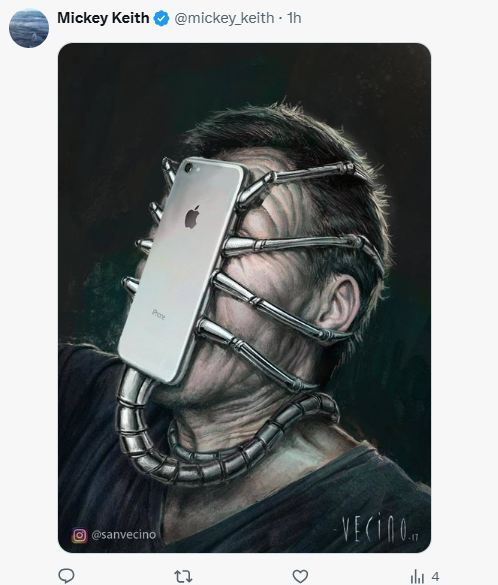
The Beautiful Ones of 2026 do not need perfect fur coats. They need perfect lighting, a strong filter, and a carefully managed following. They eat (doomscroll), sleep (when the battery dies), and preen (post, edit, delete, repost). Complex social behaviors—sustained conversation, mutual vulnerability, the slow work of building trust—atrophy because the environment never forces them. Why risk awkward silence or rejection when the algorithm will serve another hit of frictionless stimulation?
Calhoun’s mice could not emigrate. Neither can most young people in the digital enclosure. The apps follow them home. The comparison never ends. The social roles feel already claimed by influencers, high-status performers, and those with the luck or looks to win the attention lottery. So a growing share simply check out. The utopia of constant connection produces the same pathological togetherness Calhoun observed: people cluster around the same crowded digital feeders while quieter, healthier spaces of real life sit empty.
None of this requires claiming that social media is the sole cause of every cultural problem. Economics, family breakdown, delayed adulthood, and post-pandemic habits all play their parts. But the parallel is too clean to ignore. When an environment saturates every need for stimulation while removing the necessity of genuine social competence, complex behaviors collapse. The mice did not starve. They forgot how to live as mice. A generation raised inside the behavioral sink is now learning the same lesson the hard way.
The experiment is no longer forgotten. It is running in real time, and the subjects keep refreshing the page.
— The Whatfinger News Crew: Luke and Lisa
From the folks
References
- The bizarre story of a rodent utopia that predicted doom for humanity
- Behavioral sink – Wikipedia
- Mouse Heaven or Mouse Hell?
- Death Squared: The Explosive Growth and Demise of a Mouse Population
- The doomed mouse utopia that inspired the rats of NIMH
- Sexless America: Young Adults Are Having Less Sex
- Generation Z chooses ‘bed rot’ over real life
- One in four Gen Z would rather talk to AI than a real person

Top Features and Vids across all Whatfinger sites right now
- Joe Rogan: The Latest Developments in Age Reversal Research – Fast clip plus full show (MUST SEE FOLKS)
- KILLER CLOWN TAKES ELDERLY MAN – The Quartering Vid
- Your Daily Coffee Habit Just Got Officially Cleared by the Heart Doctors — and Then Some
- Enes Freedom is about to turn the WNBA’s progressive experiment into a full-contact reality check
Get on over to Whatfinger.com – Whatfinger News does millions of pageviews a month for a reason…. Truth, Justice, the American way, plus news on the Left as well – all links from all sites gives you the true news. – CLICK HERE 🛑
Drudge Report Alternative

