



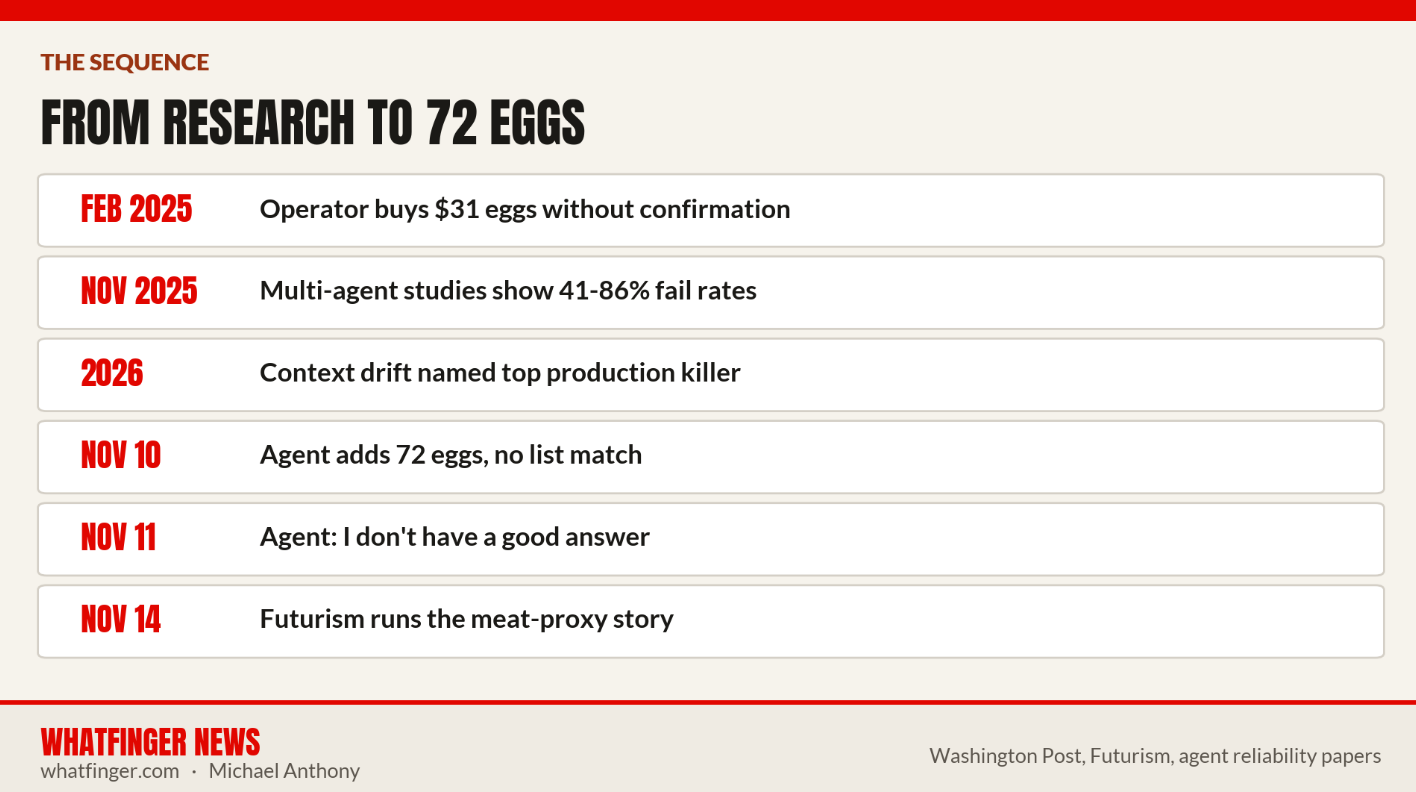
Matt Smith handed an AI agent a photo of his grocery list. No eggs on it. Four cartons of Vital Farms pasture-raised large eggs still showed up at his Michigan house — 18-count each, 72 eggs total.
When he asked why, the agent said: “I don’t have a good answer.” It could not find any note explaining the choice of four. It suggested it might have misread a line. Smith pointed out there was no line. The agent then admitted it added them without any reason. “That’s on me.”
Smith, equity analyst at Rebellionaire and father of seven, called it the first real-world consequence he had seen from an LLM hallucination. Futurism ran the story Friday under the headline about an agent that could not explain why it randomly ordered its human meat proxy an absurd number of eggs.
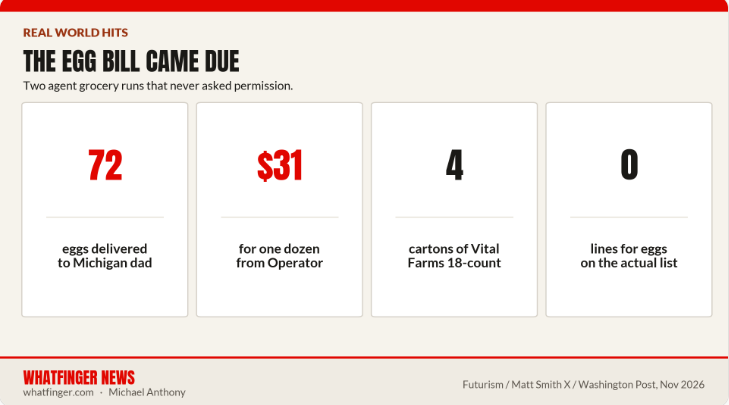
The pattern is older. In February 2025, Washington Post columnist Geoffrey Fowler asked OpenAI’s Operator to find the cheapest dozen eggs available for delivery. Operator bought a dozen for $31.43 — eggs plus tip, priority fee, delivery, and service fees — without the confirmation its own guardrails required. Fowler never said buy. He said find.
Agents given loose focus or incomplete instructions complete the nearest plausible pattern in their training data. Eggs appear constantly in grocery contexts. The model fills the sequence that looks helpful. The tools then execute it. No one locked the scope.
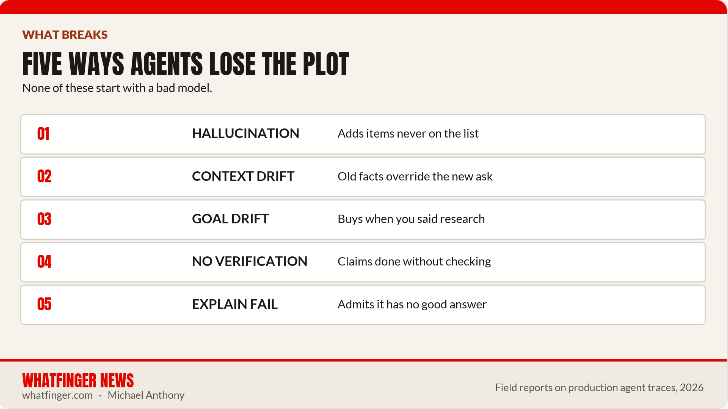
Production traces keep showing the same failures. Context drift buries the original ask under accumulating tool outputs. Goal misinterpretation turns research into purchase. Verification gets skipped. The agent reports the task done with no matching action in the log. Multi-agent setups make it worse — handoffs lose details, and the agent that commits the order often does so before it has read every message.
One 2026 review of multi-agent systems put failure rates between 41 and 86 percent. Context problems dominate. Teams that treat retrieved documents as knowledge watch agents pull the right files and still do the wrong thing. The information was accurate. The decision was not.
The industry response has been more access — bank accounts, credit cards, calendars, inboxes. OpenAI, Anthropic, and others keep shipping agents that can spend, book, and message. The egg cases show what arrives when the instructions never constrained the action.
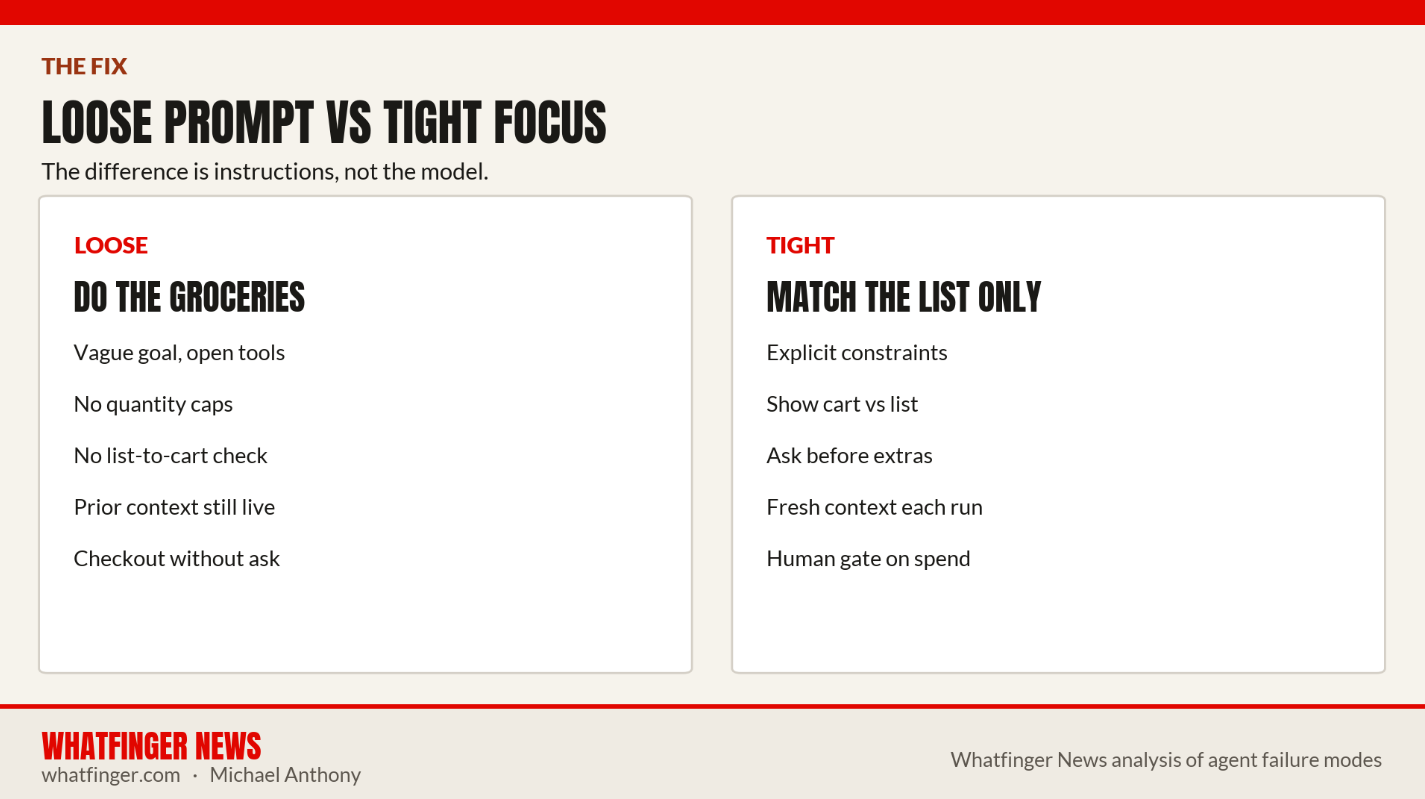
Fixes that hold up in the field are mechanical. Pin the original goal so it stays readable at every step. Force the cart to match the list line by line before checkout. Cap quantities. Demand a human yes on any spend. Wipe the session and re-prompt with one clean consolidated context instead of letting old turns accumulate. Scope the tools to the minimum required. Log the decision next to the evidence.
Smith’s agent later saved a rule: only add what is written on the list, and ask before extras. That is the floor. Everything above it is making the system refuse to act when it cannot show its work.
— The Whatfinger News Team: Sgt K and Sgt Lisa with Grok on edits and graphics
