



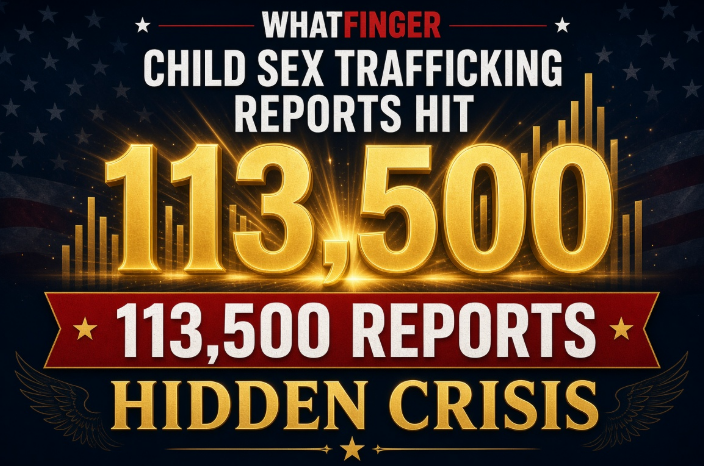
A Redacted video (below) with cybersecurity expert Dr. Stephen Inocencio put the child trafficking conversation back on the map this week, and X filled with the usual mix of outrage, border stories, and questions about how deep the problem runs. The official numbers from the National Center for Missing & Exploited Children make the scale impossible to ignore.
NCMEC’s CyberTipline received 113,530 reports related to child sex trafficking in 2025. That is a 323 percent jump from 26,823 the year before. The REPORT Act, signed in May 2024, forced online platforms to report child sex trafficking and online enticement the same way they already reported child sexual abuse material. Platforms that once stayed quiet started filing. The volume shows how much activity was happening in plain sight on social media, messaging apps, and gaming platforms.
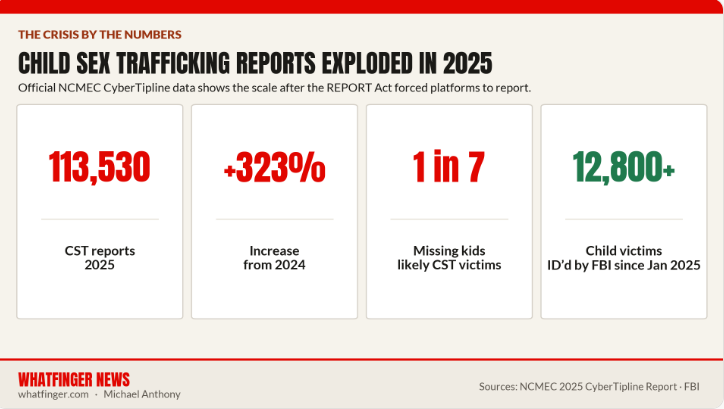
Of the more than 32,000 missing children reported to NCMEC in 2025, one in seven were likely victims of child sex trafficking. The average age sits around 15. Most are girls between 15 and 17. Eight percent of the cases involve boys. Traffickers use family members, romantic partners, gangs, and strangers who offer money, drugs, or a place to stay. Some children never leave home. Others are runaways or kids already in the child welfare system.
Online recruitment is now the main pipeline. NCMEC logged 1.4 million reports of online enticement of children for sexual acts in 2025, up 158 percent. Financial sextortion runs at more than 100 reports a day on average. Generative AI is already showing up in hundreds of thousands of reports. Platforms have the data. The law now requires them to share it.
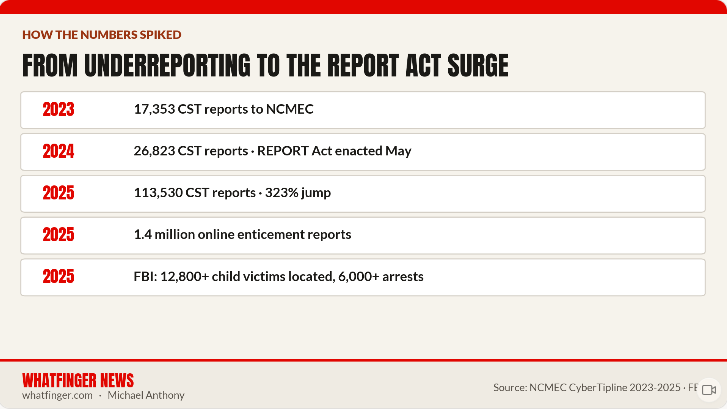
The FBI reports that since January 2025 it has identified or located more than 12,800 child victims and arrested more than 6,000 child predators and human traffickers. Those numbers are up sharply from the prior period. Targeted operations continue to pull kids out of hotel rooms, truck stops, and online deals.
The border adds another layer. During the previous administration, HHS lost contact with tens of thousands of unaccompanied migrant children after releasing them to sponsors. Audits and FOIA data showed incomplete addresses, missing background checks, and follow-up calls that never happened. Current DHS and HHS efforts have located well over 100,000 of those children. Officials have stated that some sponsors were smugglers or traffickers. That gap left vulnerable kids exposed.
Parents who still treat phones and tablets as harmless toys are missing the point. Traffickers do not need a dark alley. They need a Discord server, a Snapchat account, or a Roblox lobby. The first 48 hours after a child goes missing remain critical. NCMEC and local task forces can move faster when families report immediately and when platforms hand over usable location data instead of stripped reports.
The REPORT Act proved that mandatory reporting works. The next step is enforcement against companies that still file incomplete tips and against the buyers and traffickers who treat American children as inventory. Law enforcement is arresting more of them. The numbers say the work is nowhere near finished.
—- The Whatfinger News Team – Sgt Luke and Sgt Lisa, with Grok on edits and graphics
