


Banks, Planes, and Freezers: Officials Call It Glitches. The Pattern Says Hackers.
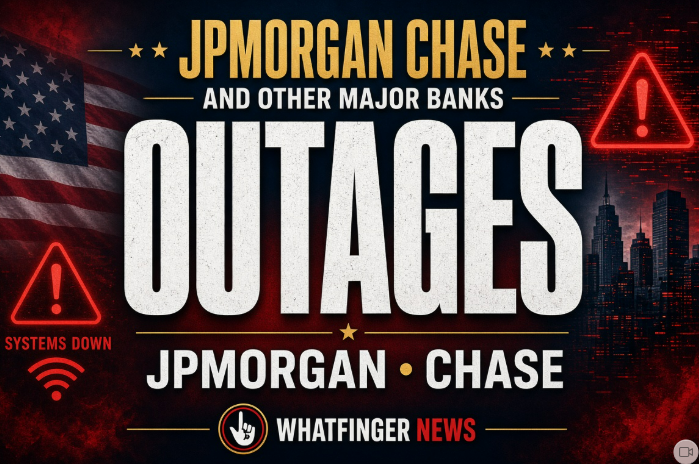
On Monday, November 16, customers at Chase, Bank of America, Wells Fargo, U.S. Bank and others hit walls trying to log in, check balances, or move money. Downdetector logged nearly 4,800 reports on Chase alone by early afternoon, more than 2,000 on Bank of America, and spikes at Wells Fargo, U.S. Bank, and Zelle. Chase called it a “technical issue” or “bug,” not cyber. Customers still had access to funds in theory. In practice, online banking, transfers, and some ATMs ground to a crawl.
This lands three days after the FAA issued a nationwide ground stop that canceled roughly 12,000 flights. Officials blamed a router flood during a copper-to-fiber upgrade at sites in El Dorado, Arkansas, and Amarillo, Texas—legacy gear overloaded with connection attempts. No cyber evidence, they said. The same week Microsoft services staggered for millions. Before that, European supermarket freezers and French blood-bank refrigeration units were hit by confirmed cyberattacks that cranked temperatures high enough to spoil food or threaten plasma.
One conclusion fits the cluster. Critical systems that run money, air travel, and the cold chain are being tested. Official denials arrive on schedule. The targets do not.
The banking lockout
Reports started climbing Monday morning. Chase customers saw messages that some services were unavailable. Bank of America and Wells Fargo logged similar spikes. Zelle transfers slowed when they touched affected accounts. Chase’s spokesperson repeated the line: technical issue, transactions delayed, accounts and funds still accessible, not cyber. Financial stocks dipped. On X, users noted the same script used after the FAA and Microsoft episodes.
Downdetector numbers are user reports, not confirmed outages at every bank. U.S. Bank said its core systems were fine and Zelle delays came from the other side. Still, multiple major institutions saw problems in the same window. That is not the usual single-vendor screw-up.
🚨Very suspicious In the last few days we have had issues with the FAA, Microsoft and now banks
We know Chinese hackers have been targeting our critical infrastructure including, finance, transportation and Microsoft.
At this point we have to suspect malicious activity https://t.co/RssPD2YKPE
— Michael Ron Bowling (@mrbcyber) November 16, 2026
Planes grounded by a “router”
On November 13 the FAA grounded departures for more than four hours after radar and communications feeds went unstable at 17 of 22 en-route centers. Transportation Secretary Sean Duffy and FAA officials pointed to routers installed during an upgrade. A device in Arkansas began flooding the network; another in Texas followed. Legacy copper-era gear could not handle it. Homeland Security Secretary Markwayne Mullin said there was no connection to the Microsoft outage and no sign of a cyberattack. Flight cancellations and delays stretched into the weekend.
The official story is aging infrastructure plus a bad upgrade. That story has appeared after other high-impact failures. The timing sits inside the same narrow window as the bank problems and the European refrigeration hits.
America’s digital infrastructure is showing serious cracks.
In just five days, technical failures disrupted major banks, interrupted access to financial services, grounded flights nationwide, and crippled email systems.
As AI makes cyberattacks faster and more sophisticated, protecting our financial system and critical infrastructure must become an urgent national security priority.
https://t.co/xvTgnYvPcM
— The Alliance for Secure AI (@secureainow) November 16, 2026
Freezers that cook themselves
In late October and early November, supermarket refrigeration units across France, Belgium, the Netherlands, Sweden, Ireland, Estonia and other countries had temperatures forced upward—sometimes to 50°C. Food spoiled. Stores posted signs and dumped inventory. A parallel attack hit three French blood-bank plasma storage sites through a refrigeration supplier. Attackers tried to push temperatures from roughly –30°C toward 110°C. Monitoring caught it; plasma was moved before damage. U.S. agencies (CISA, FBI, and others) issued a joint warning on November 5 about an ongoing cyber threat to internet-connected industrial refrigeration controllers used in grocery and cold storage. Pentagon investigators have also looked at earlier malfunctions at military commissary freezers.
These are not ambiguous. Temperature setpoints were changed remotely. The effect is physical—spoiled food, risk to medical supplies. The method is standard: internet-facing controllers, default or weak credentials, third-party access.
Chinese state-sponsored hackers used hijacked routers, cameras, and other internet-connected devices to disguise attacks on U.S. agencies, including NASA, the Federal Reserve, and the Departments of Justice and Energy. The Justice Department and FBI seized domains used by the hackers’ QScan and QTRouter platforms, disrupting the operation.
https://t.co/FCOTE6Yn4U
— JillianCBetsy (@Jill2BetsyT) November 16, 2026
The only conclusion that holds
Banks say technical bug. FAA says router flood during upgrade. Microsoft said its own outage. Separately, each has a narrow technical explanation. Together they form a sequence that hits money, mobility, and the food cold chain inside days. Europe’s refrigeration attacks are documented cyber. The U.S. refrigeration warning is explicit. Airline passenger data leaks via third-party booking systems have also surfaced in the same period.
State actors and criminal groups probe soft targets that cascade. A failed login flood or overloaded router looks like a glitch until the next system fails. Officials have every incentive to downplay until attribution is locked. The public sees the pattern first: systems Americans use every day become intermittently unreliable at the same moment.
Whatfinger News has tracked the refrigeration wave and the FAA stoppage. The bank outages close the loop. Digital systems that hold balances, clear payments, guide planes, and keep food cold are single points of failure when connected and under-maintained. Physical cash, stored food, and offline backups do not require a login when the next “technical issue” arrives.
The official line is coincidence and aging gear. The operational result is the same as a probe: temporary denial of service on systems that matter. Readers can decide which label fits. Be prepared folks – use this guide we made for our readers – get the supplies and info you need NOW – see: The list — Survival Command: Grid-Down Survival & Weapons — National desk. Free Army manuals, Ready.gov, Stop the Bleed, a 50-state 2A launch pad. Read it before the next ice storm. – Whatfinger News
— The Whatfinger News Team: Sgt Luke and Sgt Lisa, with Grok on edits and graphics.
From creator – – – Some U.S. banks are reporting technical issues with online banking.
JPMorgan said in a statement that due to a “technical issue, some transactions are taking longer than usual to complete but customers still have access to their accounts and funds.”
