



The IRS also looted $940,000 from a Navy veteran’s gun store without ever charging him with a crime.
When Andrew Clyde deposited cash under $10,000 because his insurance only covered that amount on hand, the IRS similarly accused him of “structuring” and froze the account.
After he spent over $100,000 fighting them, they kept $50,000 in a settlement.
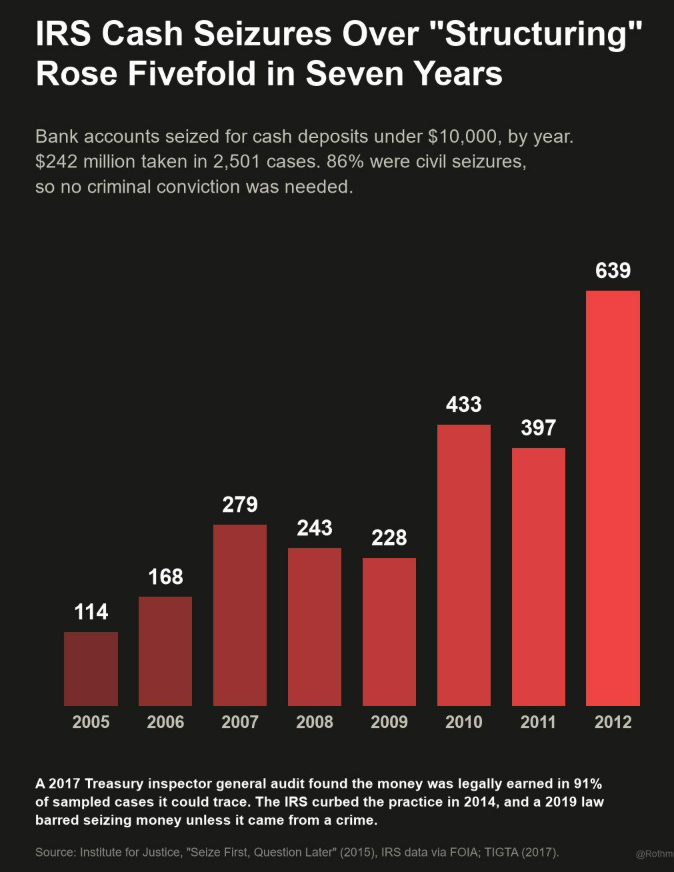
Before that, this IRS tactic targeted 2,500+ cases and pulled more than $242 million between 2005 and 2012.
A 2017 Treasury review later found that in 91% of the seizures they could trace, the money had been earned legally.
Only after Congress passed a law partly named for Clyde did the practice stop, and voters sent him to the House the next year.
— Rothmus 🏴 (@Rothmus) November 7, 2026
The IRS seized a dairy farmer’s $29,500 bank account in 2012 for depositing his own legal cash in the “wrong” size chunks, never charging him with a crime. Randy Sowers put farmers market earnings in the bank under $10,000 so he’d avoid all the extra paperwork.
The IRS seized a dairy farmer’s $29,500 bank account in 2012 for depositing his own legal cash in the “wrong” size chunks, never charging him with a crime.
Randy Sowers put farmers market earnings in the bank under $10,000 so he’d avoid all the extra paperwork.
The IRS called it “structuring”, took the money in 2012 with no warrant and no trial, and he spent years trying to get it back.
The $10,000 line became a confiscation tool until a lawsuit, a NYT article, and public anger in 2014 made the IRS announce they’ll only chase structuring cases when the source of the money is illegal.
— Rothmus 🏴 (@Rothmus) September 2, 2026
