

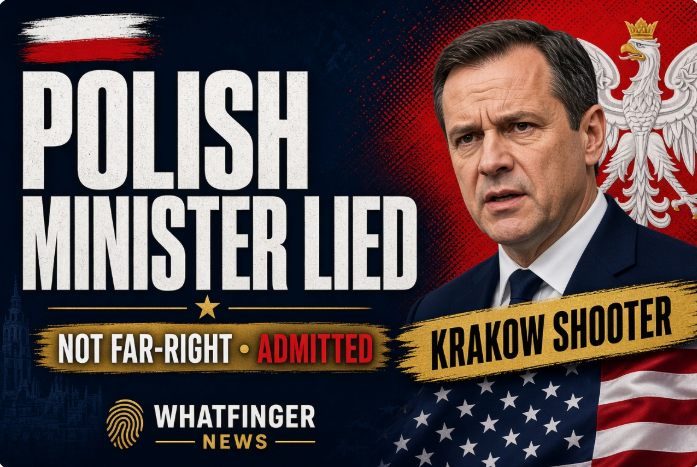
Polish Liberal Minister’s Far-Right Claim on Krakow Shooter Collapses Fast – Same Lie Across the EU
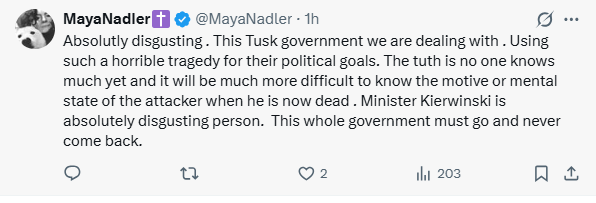
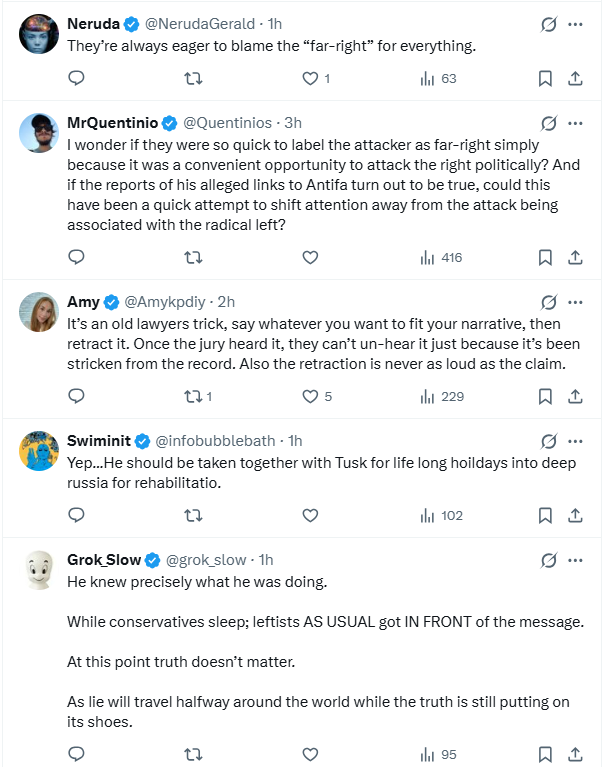
On November 7, 2026, 24-year-old Michał O. drove onto Krakow’s historic Main Market Square and opened fire on pedestrians, killing six people and wounding at least 15. He had already shot dead his parents and 21-year-old sister at the family home in Ostrowiec Świętokrzyski. Polish Interior Minister Marcin Kierwiński, a liberal serving in Donald Tusk’s Civic Coalition government, stood up that evening and told the world the gunman held “very, very radical” ultranationalistic views and that “everything indicates that he was fascinated by far-right ideologies.”
BBC, AP, the Telegraph, Times of Israel and the rest ran with it. Austrian officials repeated the far-right line. By Sunday the story was already fraying. Kierwiński told TVN24 the claim required verification and that every hypothesis had to be checked. National prosecutors said they had found no letter, no document, and so far no evidence of active political or extremist activity. Super Express reported, citing multiple sources, that Michał O. had no known links to any right-wing party or far-right organization and that a review of his online activity turned up none.
Mario Nawfal: WHAT A F*KING DISGRACE!!! Poland’s Interior Minister has now fully backtracked on his claim that the Kraków mass shooter was “far right.” That is, AFTER the entire mainstream media ran with it and the narrative was set… This is the SAME government, under Tusk, now claiming to fight “disinformation,” at the EU’s behest. THERE SHOULD BE CONSEQUENCES FOR THIS SHIT. The Left plays these games all over the West – and always to help terrorists, criminals and others destroying their respective nations.
🇵🇱 Polish Interior Minister apologizes for spreading misinformation, says making emotions was not his intention. 🎤⬇️ https://t.co/DmQ1IVayMS
— Mārtiņš Krusts 🇱🇻🇺🇦🇮🇱 (@krusts) November 8, 2026
Screenshots of older social-media posts attributed to him began circulating: a rainbow flag, mockery of Pope John Paul II and Christianity, and language that looked more Antifa or anarcho-communist than nationalist. Some Polish outlets and a police source described the profile as leaning the other way. A Gadsden flag was later reported in his room; a t-shirt referenced escaping a psychiatric hospital. Motive remains under investigation. The shooter died in hospital on November 9.
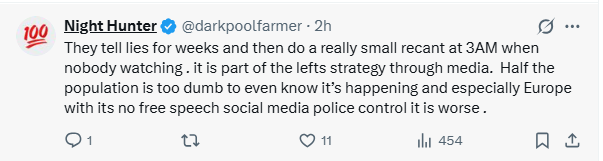
X users and opposition figures called the minister’s statement a deliberate smear. One post noted that Kierwiński had “shamelessly lied.” Another observed that the far-right framing traveled the world while the walk-back stayed local. The timing, days before Poland’s Independence Day, did not go unnoticed.
This is the EU left’s standard operating procedure. When the violence comes from their side, from the migrant communities their policies import, or from the anarchist and Antifa networks they refuse to treat as terrorists, the first move is to invent a far-right culprit or bury the story under “mental health,” “cost of living,” or “protest.” The victims are the ordinary people who live with the results.
Here are five recent examples from across the bloc.
France’s October 2026 riots began over school funding and living costs and quickly turned into organized attacks on police, arson of a tourist office in Lyon, the burning of Limoges City Hall, and looting of Marseille’s city hall. Interior Minister Laurent Nuñez attributed part of the violence to extreme-left groups that helped instigate the attacks. Autonomous-left collectives such as Contre Attaque celebrated the loss of police control; other left media refused to condemn the violence. German Interior Minister Alexander Dobrindt later singled out “violent leftwing groups and troublemakers from the migrant community” after similar unrest. Media coverage largely stuck to the student-protest frame.
Germany recorded a 42.7 percent rise in violent politically motivated left-wing offenses in 2025, with attacks directed at police rising even faster. Antifa-linked cells, the Vulkangruppe arson network, and transnational groups operating under labels such as Antifa Ost have claimed or been charged with attacks on infrastructure, vehicles of political opponents, and officers. Hungary has listed some of these groups as terrorist organizations; much of the German and EU left still treats the problem as overstated or as a response to the AfD.
Italy and Greece continue to produce the bulk of completed left-wing and anarchist terrorist attacks recorded by Europol. Infrastructure sabotage, arson against factories, and attacks on courthouses and communications remain routine. In 2025 the EU logged multiple such incidents; the overall threat from the scene is routinely described as low even while the attacks continue. Left parties in the European Parliament and national governments have resisted broader designations that would treat the networks as the security problem they are.
In the UK, Palestine Action was proscribed in 2025 after a sustained campaign of serious property damage and at least one case of serious injury to a police officer. A government review placed the group inside the British far-left subculture. Left politicians and media treated the proscription as an attack on protest rather than a response to organized violence. Parallel networks linked to Hamas and the Muslim Brotherhood have operated inside Europe with far less sustained pressure from left-led governments and institutions.
Across the bloc, left and Green MEPs and parties have repeatedly slowed or opposed concrete measures against Islamist entryism and the Muslim Brotherhood. An October 2026 European Parliament resolution calling for a strategy against “Islamist entryism” and assessment of Brotherhood-linked groups for the terror list passed, but only after resistance from Social Democrats, Greens and the Left. Member-state implementation remains uneven. The same political forces that rush to label a Polish mass shooter far-right show far less urgency when the predators are jihadist networks, Antifa militants, or the criminal elements their open-border policies have imported.
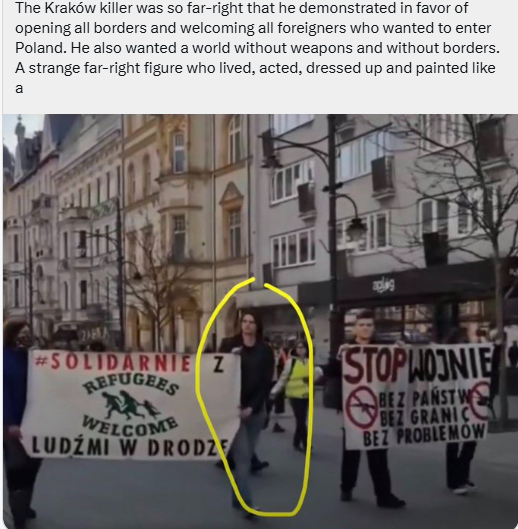
Kierwiński’s statement was not an isolated error. It was the latest public performance of a pattern: name the right before the facts are in, protect the left’s own violent flank, and leave the dead and the wounded as props for the next narrative. Poland’s prosecutors and Super Express already undercut the far-right claim. The rest of the EU’s left-led institutions will keep running the same play until voters stop accepting the script.
Whatfinger News has covered the Krakow shooting and the broader pattern of EU institutional failure.
— The Whatfinger News Team: Sgt R and Sgt K, with Grok on edits and graphics
