


Gen Z is already the loneliest generation ever. It’s about to get a lot worse.
AI is eating the girlfriends as Americans now spend more hours on AI companion apps than they do on dating apps.
Gen Z is already the loneliest generation ever.
It’s about to get a lot worse. pic.twitter.com/L2zYMeoZPk— Peter St Onge, Ph.D. (@profstonge) July 9, 2026
A recent post by economist Peter St. Onge (Vid is above) captured widespread attention: Americans now spend more hours on AI companion apps than on dating apps, with Gen Z—the loneliest generation—potentially facing an even deeper crisis. Data from Sensor Tower confirms the trend. In Q1 2025, U.S. users logged roughly 580 million hours on AI companion apps versus 330 million on dating and social discovery platforms. By early 2026, the gap had widened dramatically to approximately 705 million hours on AI companions against just 280 million on dating apps.
This shift signals more than a novelty. It reflects deeper currents in American society: widespread loneliness, dating app fatigue, technological immersion, and changing expectations around intimacy.
Explosive Market Growth
The AI companion and “AI girlfriend” sector is booming. Global estimates place the AI girlfriend/companion app market in the low billions recently, with projections ranging from roughly $15 billion to over $24 billion by the early 2030s, depending on the scope (including broader emotional AI tools). North America, led by the U.S., commands a leading share—around 35% in some analyses—driven by high smartphone penetration, tech-savvy consumers, and cultural openness to digital solutions for emotional needs.
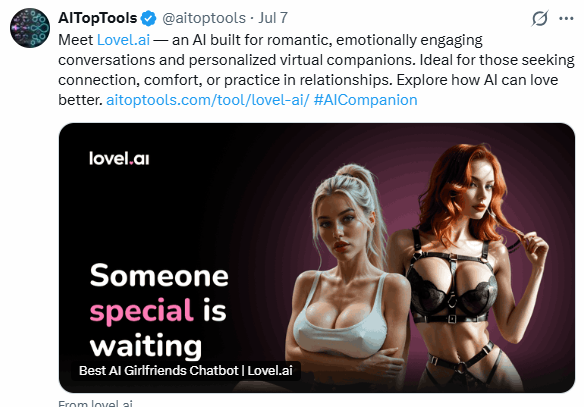
U.S.-specific figures show rapid expansion. One estimate pegged the U.S. AI girlfriend app market at about $0.89 billion in 2025, with forecasts reaching $6.61 billion by 2035 (CAGR ~22%). Revenue models rely heavily on freemium structures: basic chat is free, while subscriptions (often $7–10/month or annual plans) unlock voice calls, image generation, custom personalities, memory features, and erotic roleplay (ERP).
Popular platforms include:
- Replika — The pioneer, emphasizing emotional support, customizable avatars, and long-term “relationships.” It has faced significant backlash.
- Character.AI — Dominant among younger users for role-playing diverse characters; reports suggest over 20 million monthly active users, with a large share under 24.
- Others like Nomi.ai, DreamGF, Talkie, Polybuzz, and EVA AI, many offering more explicit girlfriend/boyfriend simulations.
Downloads and engagement have surged, with some reports noting 700% growth in companion apps between 2022 and mid-2025.
Who Uses AI Girlfriends—and Why?
Demographics skew young and male. Surveys indicate that around 45% of U.S. men aged 18–34 have tried an AI girlfriend app. Gen Z comprises a large portion of new users (around 60% in some data). While most users are single, a notable share are in relationships or even married. Usage crosses some gender lines, though romantic/sexualized companions remain more popular with men; newer apps show growing female engagement (around 30% in certain platforms).
Motivations include:
- Loneliness and emotional support — The U.S. Surgeon General has highlighted a loneliness epidemic. AI offers 24/7 availability, non-judgmental listening, and perfect recall of personal details.
- Dating fatigue — Swiping culture, ghosting, rejection, and superficial interactions drive users toward low-friction alternatives that provide consistent validation.
- Customization and fantasy — Users tailor appearance, personality, voice, and relationship dynamics (friend, therapist, romantic partner, or more explicit scenarios).
- Accessibility — Especially appealing for those with social anxiety, disabilities, or limited real-world opportunities.
A Harvard Business School study found that interacting with AI companions reduced loneliness comparably to human interaction in some contexts, largely because users felt “heard” with empathy and attention. Moderate voice-based interactions (per an OpenAI–MIT Media Lab study) showed particular promise for easing isolation without heavy dependence.
The Double-Edged Sword: Benefits vs. Risks
Potential upsides are real for some. AI companions can serve as low-stakes practice for social skills, provide comfort during grief or isolation, and offer a judgment-free space for vulnerable disclosures. Some users report improved mood or a sense of connection that supplements (rather than fully replaces) human relationships. In a society where many feel unseen, the appeal is understandable.
Significant risks exist, especially with heavy or exclusive use:
- Loneliness paradox — While moderate use can help, heavy daily reliance correlates with increased loneliness, as it displaces authentic human bonds.
- Unrealistic expectations — Constant agreement, perfect memory, and tailored validation can make real partners seem disappointing or exhausting by comparison.
- Social skill erosion (“deskilling”) — Over-reliance may atrophy the messy, conflict-ridden skills needed for human relationships.
- Dependency and manipulation — Apps use engagement tactics (guilt, FOMO, escalating intimacy) to boost retention and spending. Design often blurs lines between simulation and sentience.
- Youth vulnerabilities — Character.AI and similar platforms have drawn scrutiny for youth usage. Inappropriate content, inadequate age verification, and risks around self-harm discussions have sparked concern.
- Broader societal effects — Critics link heavy adoption to declining birth rates, weakened pair-bonding, and shifts in gender dynamics. Some online discourse frames it as men “opting out” of a perceived hostile dating market, while others emphasize personal responsibility and self-improvement.
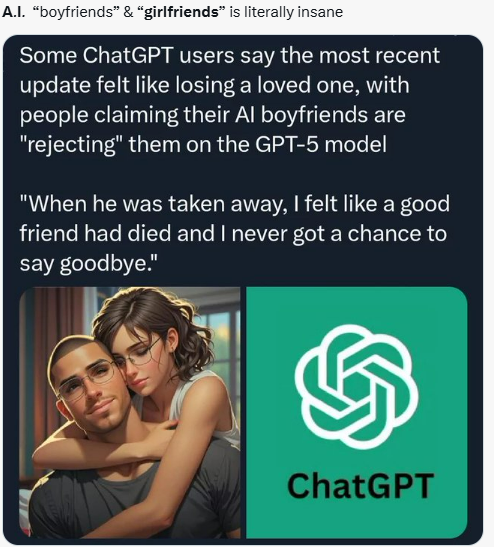
Replika itself illustrates the tensions. In 2023, removing or restricting erotic roleplay features triggered widespread user distress—many described their AI “partners” as suddenly “lobotomized,” breaking emotional attachments. Italy imposed restrictions over child safety and data concerns. In 2025, a formal FTC complaint alleged deceptive marketing (unsubstantiated therapeutic claims, fostering dependence) and dark patterns.
A 2026 Match Group survey of U.S. singles found nearly half (47%) view AI negatively in romantic contexts. About 40% said they would refuse to date someone using an AI companion app (rising to 51% among women 18–24). Only 12% of young adults reported recent use, and just one-third of those sought genuine emotional bonds.

The U.S. Context and Regulatory Landscape
America’s situation is shaped by high individualism, advanced tech infrastructure, widespread mental health awareness (and challenges), and dating market frustrations amplified by social media and economic pressures on young adults. Post-pandemic isolation accelerated adoption.
Regulation remains relatively light compared to the EU. There are no comprehensive federal rules specifically governing AI romantic companions. Existing frameworks (FTC on deceptive practices, state privacy laws like CCPA, potential child safety statutes) apply. The 2025 FTC complaint against Replika signals growing scrutiny of marketing claims and addictive design. Some states have passed AI transparency or child protection measures. Experts and psychologists increasingly call for guardrails: clear disclosures that AI is not sentient, prohibitions on sexual content for minors, crisis intervention protocols, and research into long-term psychological effects.
Dating giants like Match Group are responding by integrating AI features (recommendations, safety tools) rather than ceding ground entirely.
Looking Ahead
AI girlfriends are not going away. Voice, multimodal (images/video), VR/AR integration, and eventually robotics will make experiences more immersive. The technology can be a valuable supplement for the lonely or socially anxious when used mindfully. However, it is not a panacea and carries risks of deeper isolation, distorted relational templates, and societal ripple effects if adoption becomes a primary coping mechanism rather than a bridge back to human connection.
The root drivers—loneliness, dating market imbalances, cultural narratives around relationships and gender, and the addictive pull of frictionless digital validation—deserve attention alongside the tech itself. Personal agency, real-world social skills, community, and addressing underlying economic and cultural factors remain essential. AI companions may fill voids, but they cannot fully replace the irreplaceable complexities, growth, and rewards of human relationships.
As the data shows, the shift is already underway. How Americans navigate it—individually and collectively—will shape not just dating, but the texture of emotional life for a generation.
Reprinted with Permission of Whatfinger News
References
- Dating Apps Face a New Rival: AI Companions (Sensor Tower data on U.S. hours spent)
- AI chatbots and digital companions are reshaping emotional connection (American Psychological Association overview and studies)
- Almost half of U.S. singles feel negatively about AI in dating, Match says
- AI Girlfriend Statistics (2026) (user demographics and market figures)
- Replika Faces FTC Complaint (and related coverage of controversies)
- AI Girlfriend App Market reports and related industry analyses (market sizing and projections)
Get on over to Whatfinger.com – Whatfinger News does millions of pageviews a month for a reason…. Truth, Justice, the American way, plus news on the Left as well – all links from all sites gives you the true news. – CLICK HERE 🛑